Validation Roadmap

Staged, evidence-gated validation pathway

INFORMPULSE progresses through a staged validation pathway from controlled laboratory testing through pilot and field. Lab execution is on NO-GO / HOLD until M1–M4 evidence gates close. Each of the ten homepage commercial theses is matched below to the work package, open research question, milestone and stage that will independently validate it.

Stages

Validation stages

S0 · Complete

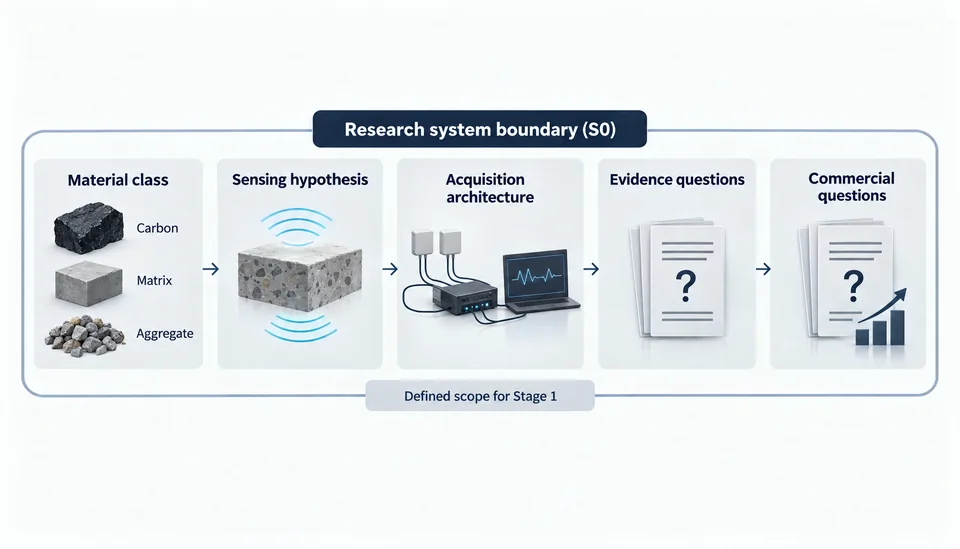
Stage 0 — Research & Architecture Definition

System boundary, material classes, sensing hypothesis, DAQ architecture and commercial thesis defined. Evidence framework and stage-gate controls established.

S1 · Current · NO-GO / HOLD

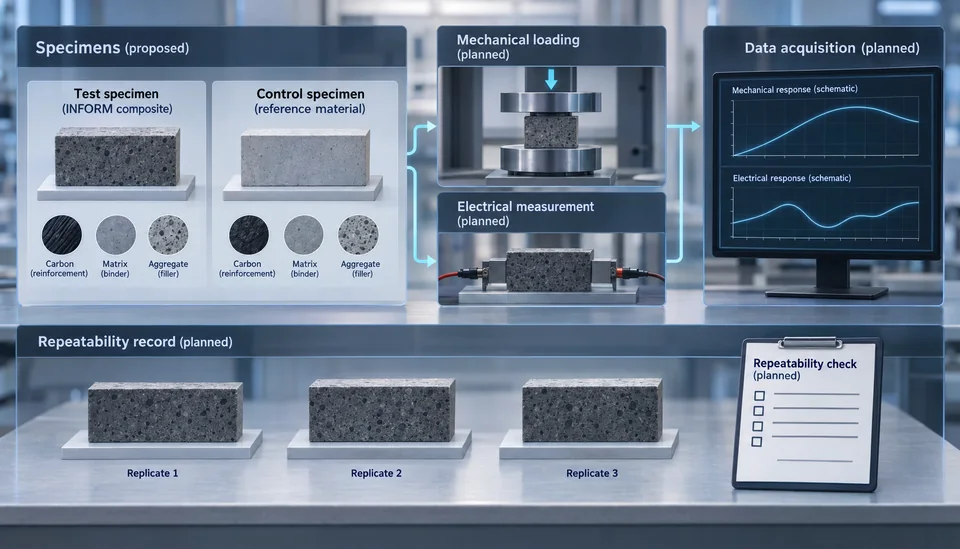
Stage 1 — Controlled Laboratory Validation

Test graphene-family and tyre-derived TG/FG-like conductive-carbon cementitious samples against controls with frozen protocol, material traceability, WHS approval and DAQ dry-run evidence. Gate items M1–M6 must be verified before lab execution is authorised.

S2 · Pending

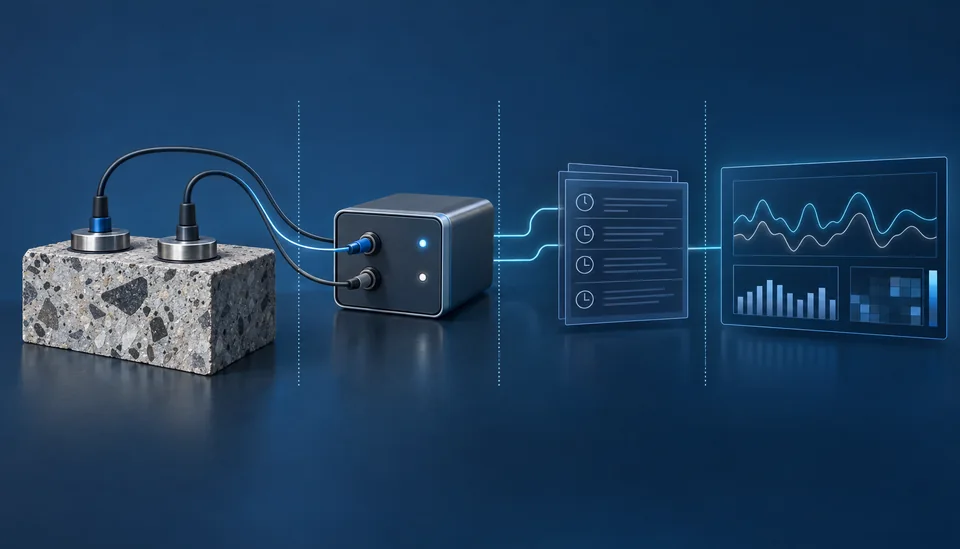
Stage 2 — Prototype Sensing & PULSE Analytics

Confirm repeatable signal capture, electrode stability, data ingestion, timestamping, anomaly classification and digital-twin integration under controlled loading.

S3 · Pending

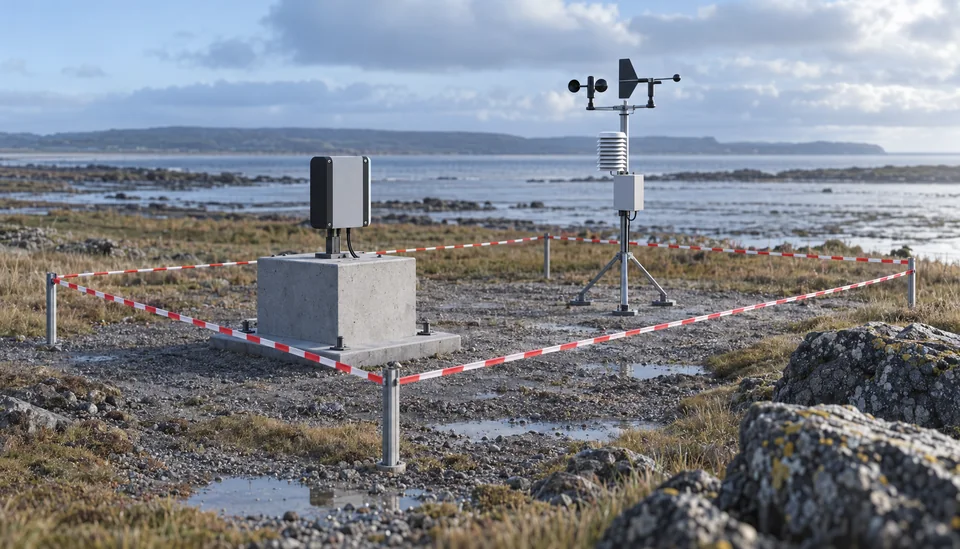
Stage 3 — Pilot Pour / Field-Relevant Trial

Constructability, curing effects, environmental drift and asset-owner usefulness under realistic batching and loading. Engage infrastructure partners and confirm standards-aligned acceptance criteria.

S4 · Pending

Stage 4 — Field Monitoring & Adoption Pathway

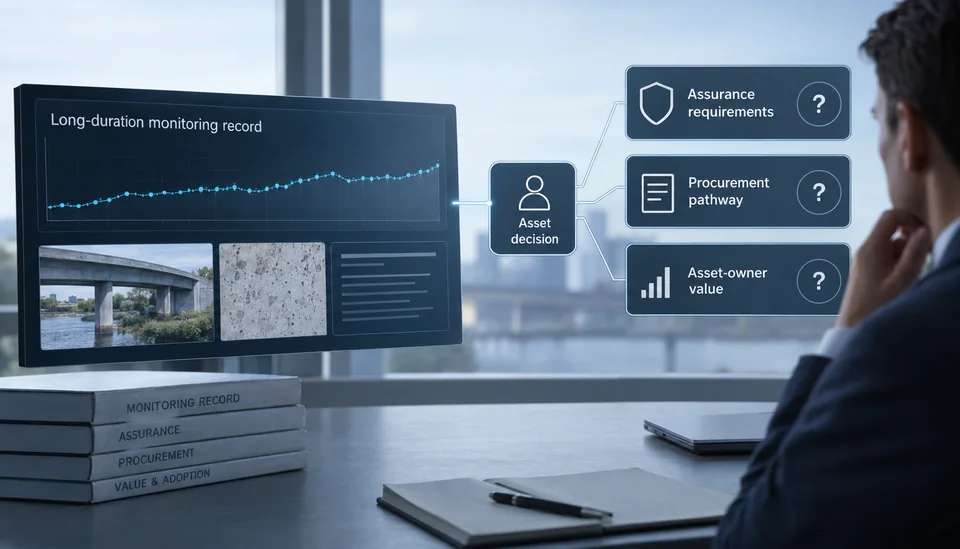
Long-term data quality, maintenance decision value, standards alignment, procurement requirements and commercial model.

S5 · Pending

Stage 5 — Commercialisation & Standards Pathway

Standards mapping, procurement-readiness evidence, LCA / TEA, IP / FTO review, pilot-to-market decision. A pilot bridge deployment under Austroads supervision is plausibly the fastest credible path to TRL 7.

Stage 1 milestone gates

Evidence required before lab execution

No lab execution proceeds until M1–M4 are complete.

IDMilestoneDe-risking questionEvidence required
M1Protocol FreezeIs the test method locked and auditable?Approved protocol, change log, test matrix
M2Materials VerifiedDo we know exactly what material is being tested?COA, SDS, batch/lot number, receipt log
M3DAQ Dry-RunCan the measurement system capture known signals?Dummy-load, reference resistor, noise-floor and channel logs
M4WHS / Lab ApprovalIs the work safe and formally authorised?Risk assessment, JSA/SWMS, SDS review, lab induction/access
M5Controlled SamplesCan samples be produced reproducibly?Batch records, controls, replicates, curing records
M6Signal ValidationIs electrical response repeatable and useful?Load-response data, drift assessment, electrode stability checks
M7Pilot ReadinessCan results transfer beyond benchtop conditions?Pilot design, partner approval, constructability review

Thesis → Validation handoff matrix

Each homepage commercial thesis matched to its evidence pathway

This matrix mirrors the ten commercial theses on the homepage and binds each to a specific work package (WP), open research question (Q), milestone (M), stage (S) and external-comparator gate. Validation is by independent academic review under the UTS-led research collaboration and the CRC-P consortium.

ThesisWPQuestionMilestoneStageIndependent review
01 · Materials uplift (compressive)WP2, WP3, WP4Q01, Q02M5, M6S1 → S2UTS materials lead · NATA-accredited testing
02 · Piezoresistive gauge factorWP5, WP7Q06M6S1 → S2 → S3L21 SHM benchmarking · independent reviewer
03 · FJH synthesis economicsWP1Q08M2S1 (pre-lab)CRC-P feedstock partner · audited yield/energy
04 · Dispersion scienceWP3Q03M3, M5S1Academic chemistry lead · ζ-potential / DLS at independent lab
05 · SHM utility under loadWP6, WP7, WP8Q05, Q06, Q07M6, M7S2 → S3L21 reviewer · comparator (FBG, AE, PZT, vibration)
06 · Calibration & driftWP5, WP6Q05M6S3 (Australian environment)Independent SHM reviewer · pre-registered statistical acceptance
07 · PULSE / digital twinWP6Q05, Q06S2 → S3SCSHM-DEIMC-style benchmark · external software-quality reviewer
08 · Law-of-Fives economicsWP9Q07S4 → S5LCA / TEA peer review · asset-owner pilot data
09 · Standards gapWP10Q07S5 · L25Austroads / state road authority · ABCB CodeMark · RILEM TC
10 · Market & commercialisationWP9, WP10S5Investor data room · third-party valuation / market analyst

Layer 21 — SHM benchmarking

SHM benchmarking is a separate gate (currently Conditional Proceed — Not Pass)

Before INFORMPULSE can claim utility relative to existing structural-health-monitoring methods, it must be benchmarked against fibre Bragg grating sensors, strain gauges, acoustic emission, digital image correlation, vibration-based SHM and visual inspection under a common test plan, with ground-truth instrumentation, pre-registered acceptance criteria and an independent reviewer.

Pass criteria (summary): common test plan and specimen matrix; ground-truth comparator instrumentation; pre-registered statistical acceptance criteria (sensitivity, specificity, false positives, false negatives, drift, signal-to-noise, localisation, cost, installation time); independent review; bounded-pass language by asset class and damage mode is acceptable.

Connected pages

Where to go next

Research collaboration

WP1–WP10 matrix · Q01–Q08 · STEP 01–06 engagement pathway.

Open

Pilot pathway

Stage 3–4 pilot framing for asset owners and infrastructure partners.

Open

Literature anchors

Material-class glossary and the full literature references behind every thesis.

Open