INFORM is an early-stage applied-research programme. The investable proposition depends on closing linked material, sensing, scale-up, adoption and unit-economics risks—not on extrapolating isolated literature results.
No revenue claimedNo product certificationDetailed model: restricted
Concept illustration
Forward-looking information
Performance, market, cost, valuation and adoption statements are hypotheses or scenarios unless explicitly labelled as observed. Nothing on this page is an offer, forecast, product warranty or financial advice.
Current posture
What a diligent investor should see first
Maturity
Stage 1 · TRL 3–4
Pre-laboratory activation remains on hold pending evidence-gate closure. TRLGlossary · TRLTechnology readiness level: a 1–9 scale describing how mature a technology is, from basic principles to proven operation.All terms → is provisional and system-specific.
Concept illustration
Evidence
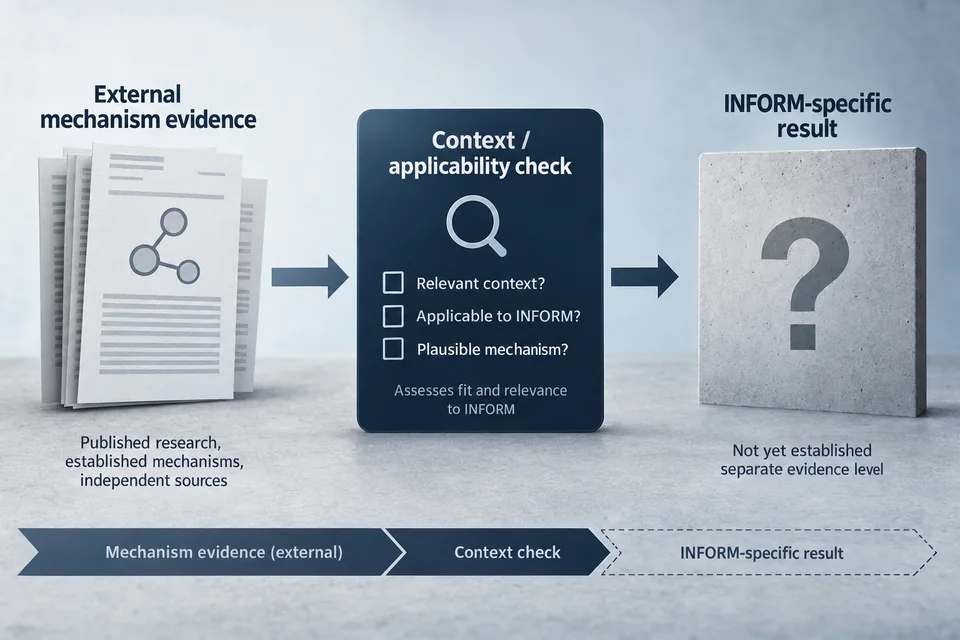
Mechanism precedes result
External studies support plausible mechanisms. They do not establish INFORM strength, gauge factor, durability or cost.
Concept illustration
Governance
Stage-gated de-risking
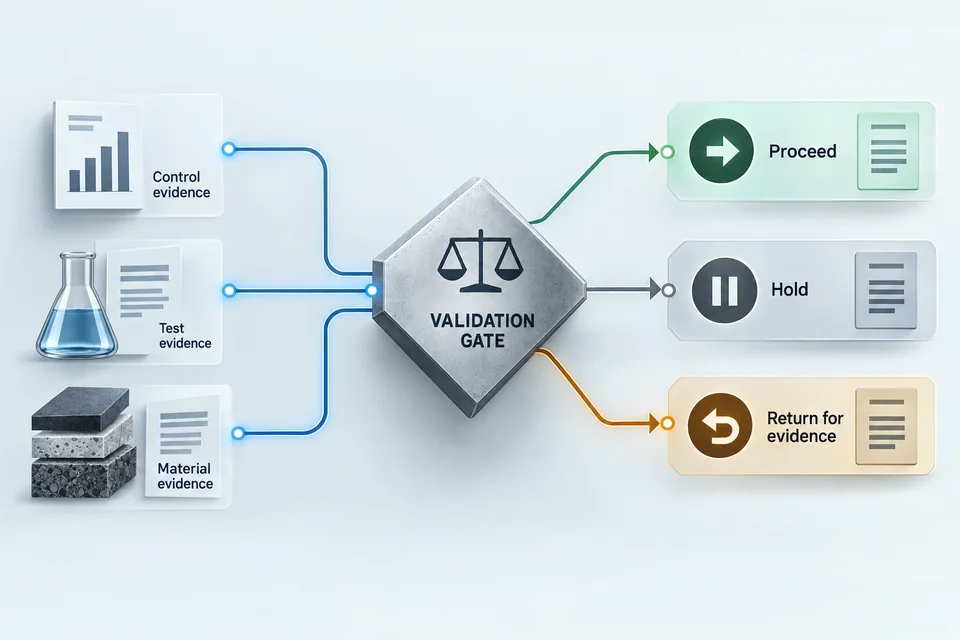
Claims, risks, changes, requirements and decisions are controlled so diligence can follow evidence to source.
Concept illustration
Confidentiality
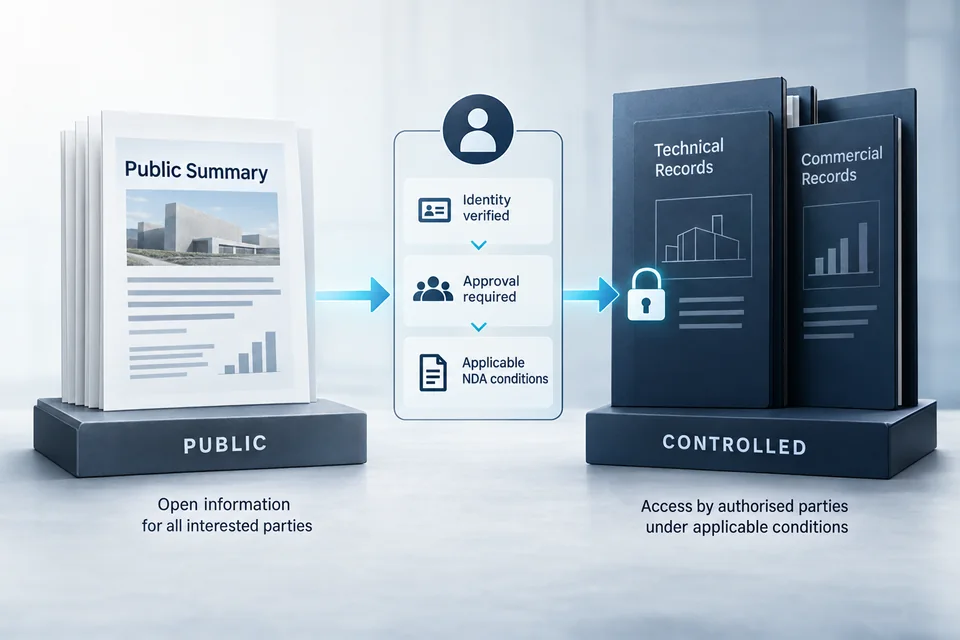
Progressive disclosure
Public boundary first; technical and commercial dossiers after identity checks, approval and NDA where appropriate.
Concept illustration
Programme structure
Two Divisions. One Infrastructure Platform.
INFORM is structured around two complementary divisions designed to progress from an improved concrete material to an integrated infrastructure intelligence platform.
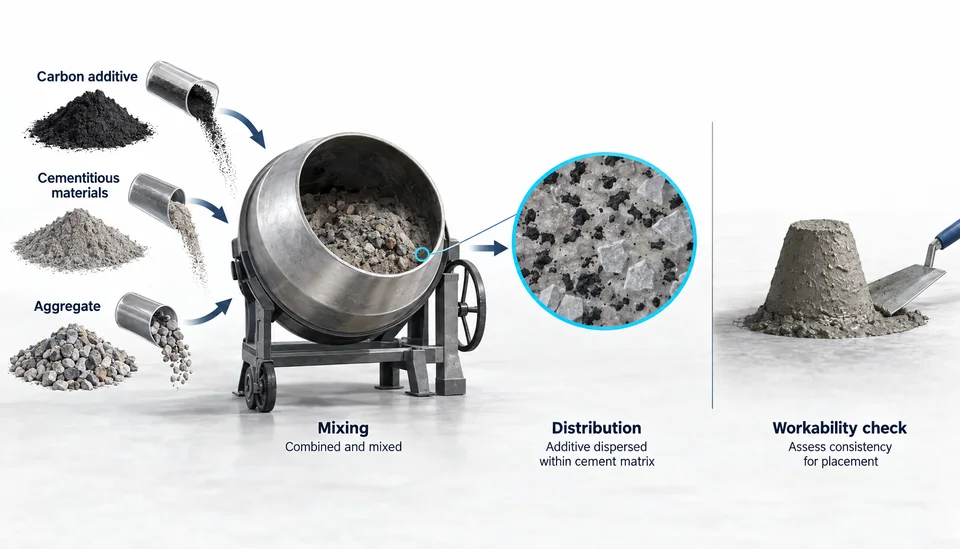
Division 1 focuses on the underlying concrete system.
Its objective is to develop and validate a next-generation concrete formulation designed to deliver:
Lower embodied carbonLower lifecycle costExtended service life
Concept illustration · Lower embodied carbonConcept illustration · Lower lifecycle costConcept illustration · Extended service life
The programme investigates how material selection, formulation and durability improvements can reduce environmental impact and whole-of-life infrastructure cost while maintaining the engineering performance required for real-world construction.
Government and industry are pushing for lower-carbon construction products, while asset owners need a lower-cost, longer-life model. Division 1 targets both: a formulation designed to reduce embodied carbon without raising whole-of-life cost, and durability gains that act at Phase A of De Sitter’s Law of Fives — where every $1 spent counts most.
Policy pushInfrastructure Australia recommends a common national approach to drive market demand for low-carbon solutions.
Measured baselineConstruction produces 37–64 Mt CO₂e of upfront embodied carbon a year to 2026–27; about 23% is abatable with practical strategies.
Owner economicsAsset owners need lower lifecycle cost and longer service life — fewer repair and replacement cycles.
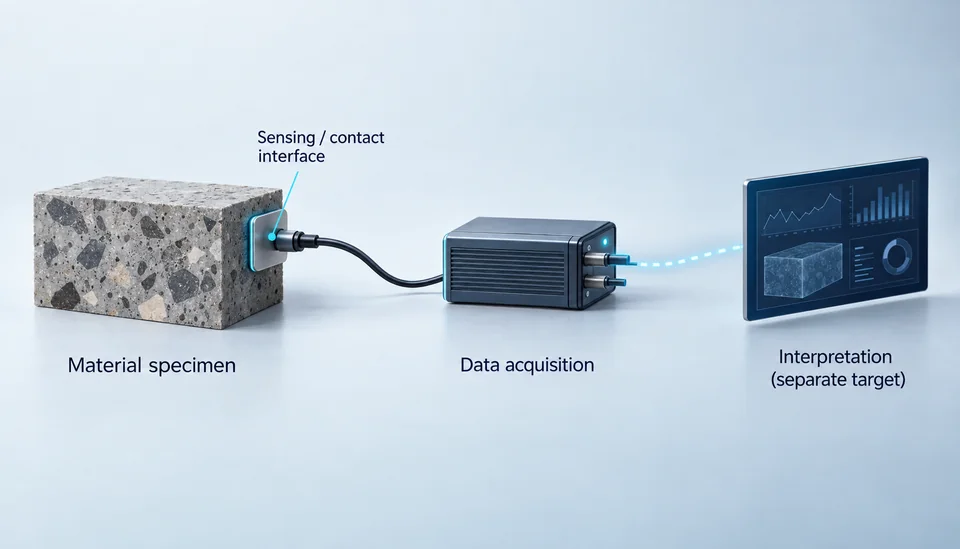
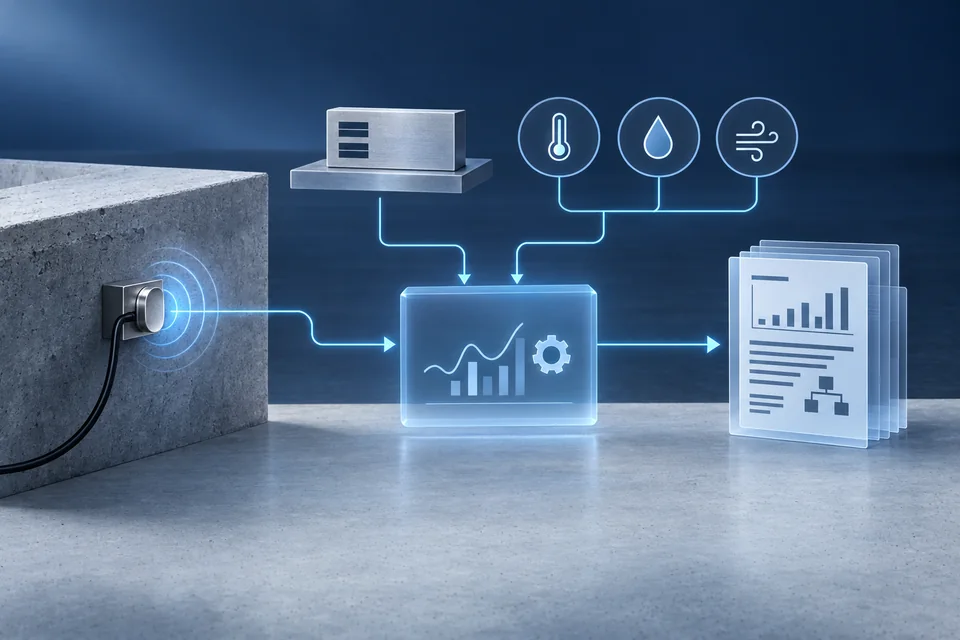
Division 2 builds on the Division 1 material platform by adding embedded sensing, data acquisition and the PULSE™ digital monitoring architecture.
Concept illustration
The objective is to enable infrastructure to provide information about its condition throughout its operational life — supporting the detection, interpretation and management of changes in structural behaviour.
Concrete→Sensing→Data→Structural Health Insight→Asset Management
Rather than relying solely on periodic inspection, Division 2 is designed to investigate whether the infrastructure itself can become an additional source of decision-grade condition data.
The Law of Fives holds that every $1 spent getting a concrete structure right at design and construction is as effective as $5 of preventive maintenance before corrosion starts, $25 of repair once local corrosion is active, and $125 once corrosion is generalised. Division 2 is designed to test whether continuous condition data can help asset owners act earlier on that curve — where intervention costs least.
$1
$5
$25
$125
A · Design & constructionB · Preventive, before corrosionC · Repair, local corrosionD · Major repair or replacement
Total delivered monitoring cost competes over the asset lifecycle.
Installed BOMGlossary · BOMBill of materials: the full list of components and materials needed to build and install a system.All terms →, batching impact, calibration, comms, support and replacement.Concept illustration
Integration and assurance costs overwhelm material savings.
Material identity, dispersion reproducibility, controls, mechanical integrity, electrical network and repeatable response.
Concept illustration
Tranche B · System
Instrumented prototype
Electrode stability, DAQ integrity, calibration, PULSE analytics and controlled comparison against incumbent sensors.
Concept illustration
Tranche C · Pilot
Adoption evidence
Field constructability, environmental stability, asset-owner decision value, standards pathway and a defendable delivered-cost model.
Concept illustration
Residual uncertainty
Risks carried openly into diligence
A
Scale economics
Unknown
Independent, delivered economics for tyre-derived turbostratic graphene at relevant industrial volume are not established for INFORM.
Concept illustration
B
Long-duration stability
Unknown
Gauge-factor and calibration stability under Australian moisture, temperature and service conditions remain unverified.
Concept illustration
C
Standards gap
Observed gap
No Australian design standard provides a complete acceptance route for graphene-based self-sensing structural concrete.
Concept illustration
D
Customer willingness to pay
Validation target
Avoided-cost logic must be confirmed through asset-owner pilots and procurement evidence, not market-size forecasts alone.
Concept illustration
Enter diligence in controlled stages
Provide organisation, role, jurisdiction and intended use. Approved parties receive documents progressively as the diligence question and confidentiality level justify.